Buying Guides
Turbo Trainer Accessories: What You Actually Need (2026)
The short answer
- Three accessories are non-negotiable for every indoor cyclist: a trainer mat, a fan and a front-wheel riser block. Budget roughly 80 to 100 pounds for the set.
- Wheel-on trainers also need a trainer-specific tyre. It cuts noise and stops the roller shredding your road rubber. Direct-drive owners can skip it entirely.
- A 30 pound floor fan delivers most of the cooling benefit of a 230 pound Wahoo KICKR Headwind. Only upgrade if you train four-plus times a week.
- A sweat guard plus a towel is the cheapest insurance you can buy: I have killed two headsets with sweat, so 10 to 20 pounds here saves hundreds in repairs.
- This page links out to my full mat, tyre and fan roundups so you can go deep on whichever accessory you need next.
A turbo trainer mat, a fan and a front-wheel riser block are the three accessories every indoor cyclist genuinely needs, and the whole set costs roughly 80 to 100 pounds. If you ride a wheel-on trainer, add a trainer-specific tyre: it reduces noise and stops the roller shredding your road rubber. Everything beyond those four items is a comfort upgrade rather than a requirement.
I have kitted out a lot of pain caves over the years, and the same pattern always holds: riders overspend on the trainer and then skip the cheap accessories that actually make the sessions bearable. Below I have ranked every common accessory by how much it improves your riding, not by how much it costs, with links through to my dedicated mat, tyre and fan roundups.
Turbo trainer accessories, ranked by priority
I sorted these by impact on a real training session, not by price. Buy the essentials first, then add the recommended items as your floor, your bike or your neighbours start to complain.
| Accessory | Priority | Typical price | Why it matters |
|---|---|---|---|
| Trainer mat | Essential | £35-60 | Protects floors from sweat, damps vibration noise |
| Fan | Essential | £15-230 | No airflow indoors means overheating within 10 minutes |
| Front-wheel riser | Essential | £8-15 | Levels the bike, the trainer lifts the rear 2-4 inches |
| Trainer tyre | Wheel-on only | £20-25 | Cuts noise, saves your road tyre from shredding |
| Sweat guard | Recommended | £10-20 | Catches sweat before it corrodes your headset |
| Trainer desk | Optional | £60-150 | Holds tablet, drinks and tools at riding height |
| Speed-responsive fan | Luxury | ~£230 | Ramps airflow as your power rises |
The three “essential” rows are where almost everyone should start. The rest depends on how often you ride, where you ride and how much you sweat.
Ranked accessory picks
These are the specific products I keep recommending to riders I coach. The mat and tyre carry the most weight because they fix the two biggest indoor complaints: floor damage and noise.

Wahoo
Wahoo KICKR Trainer Mat
Best for Anyone training upstairs or on hard floors
Large enough to take any trainer plus bike, with thick PVC that soaks up vibration and a non-slip base. The standard forum recommendation, and the one under my own setup.

Continental
Continental Hometrainer II Tyre
Best for Wheel-on trainers used 2+ times a week
Blue-compound tyre built for the roller. Lasts far longer than road rubber, grips the drum well and runs noticeably quieter. The one I fit on test bikes.
Vittoria
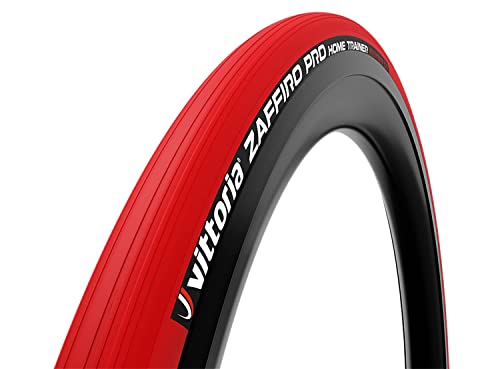
Vittoria Zaffiro Pro Home Trainer
Best for Occasional wheel-on riders
A cheaper trainer tyre that does the core job. Slightly less durable than the Continental, but fine for one or two sessions a week if you want to spend less.
Training mats: the one you cannot skip
A trainer mat does two jobs: it catches the sweat that would otherwise corrode metal and stain wood, and it damps the vibration that travels through floors and walls. The mat will not change the headline noise much, but the low-frequency rumble that annoys people downstairs drops noticeably once one is underneath. If you train upstairs or in a flat, a mat is non-negotiable.
The Wahoo KICKR mat is my default pick because it is big enough for the whole bike-and-trainer footprint and the thick PVC genuinely resists sweat over years. A Saris mat at around 40 pounds covers the trainer footprint and is fine for a ground-floor room, just with a little less dampening, and a Minoura mat at around 35 pounds is the cheapest sensible option. A yoga mat over a camping mat is a workable stopgap, but it will not last.
For the full comparison, including Saris, Kinetic and Minoura options, see my best turbo trainer mats for noise deadening roundup. If you are still deciding whether you need one at all, I answer that directly in do you need a training mat under your turbo trainer.
Fans: the most underrated accessory
Outdoors, the air moving past you does the cooling. Indoors there is none, so your core temperature climbs faster than your body can shed it. Without a fan I see riders fade inside ten minutes and double their sweat output, which then attacks the bike. Position a fan at chest or handlebar height, pointed at your torso.
You do not need to spend much to start. Here is how I think about the budget:
- 15 pounds buys a supermarket desk fan that is fine for sessions under 45 minutes.
- 30 to 50 pounds gets a proper oscillating floor fan with real airflow for longer rides. This is what I tell most riders to buy.
- Around 230 pounds buys the Wahoo KICKR Headwind, which connects over ANT plus and ramps fan speed with your power or heart rate. It is excellent on hard intervals but hard to justify unless you ride often.
I cover the full range, including the Headwind and cheaper alternatives, in my turbo trainer fans reviewed guide. Cooling matters even more if you ride somewhere enclosed: see can you use a turbo trainer in an apartment for heat and noise management in tight spaces.
Front-wheel riser blocks
A turbo raises your rear wheel by 2 to 4 inches. Leave the front wheel on the floor and the bike tips nose-down, loading your wrists, shoulders and lower back. A riser block levels everything out. Most have three grooves for different heights and a non-slip base that stops the front wheel rolling. They cost 8 to 15 pounds and effectively last forever.
Direct-drive trainers such as the Wahoo KICKR Core 2 or the Tacx Flux 2 remove the rear wheel, so the height difference is smaller, but a riser still improves comfort on anything over half an hour. It is cheap enough that I keep one under every test bike regardless of trainer type.
Trainer tyres: essential for wheel-on, pointless for direct drive
A wheel-on trainer presses a steel roller against your rear tyre. Road tyres are not built for that constant point load: they overheat, wear flat-spots and leave black residue on the drum. A trainer-specific tyre uses a harder compound that takes the heat, lasts far longer and runs quieter. During testing the switch from a worn road tyre to a Continental Hometrainer dropped a clear amount of the high-pitched whine at the roller.
The Continental Hometrainer II is my pick for regular riders; the Vittoria Zaffiro Pro is the value option for occasional use. Both are in the cards above. Direct-drive owners need none of this, which is one of the quiet advantages of going direct drive: zero tyre cost and zero tyre noise.
If you are weighing it up, I have dedicated guides on whether trainer tyres are actually quieter and worth it, whether you need a special tyre at all, and what causes tyre wear on wheel-on trainers. For the product comparison itself, see my turbo trainer tyre roundup.
Sweat guards and towels
This is the accessory riders skip and then regret. A sweat guard is a fabric strip running from stem to seatpost that catches drips before they reach your headset, stem bolts and top tube. Sweat corrodes alloy and can seize a headset over a single winter. I have personally killed two headsets this way, which is why every test bike now wears a guard and a towel over the bars. At 10 to 20 pounds, a sweat guard is the cheapest bike insurance you can buy. The towel is free, so use one you already own.
Trainer desks
A trainer desk holds your tablet, phone, drinks bottles, gels and a multi-tool at riding height. It is not essential, but if you ride Zwift, TrainerRoad or MyWhoosh it stops you craning down at a phone propped on a chair. Adjustable-height models in the 60 to 150 pound range are the most useful because you can match them to your bars. If you are on a budget, an ironing board set to the right height is the classic free hack and works surprisingly well.
Noise reduction: the accessories that actually help
Noise is the single most common complaint I hear about indoor training. The accessories above do most of the work, but a few extra habits help:
- Use a trainer mat to stop vibration transmitting through floors and walls.
- Fit a trainer tyre on wheel-on setups for a smoother, quieter contact with the roller.
- Keep bearings greased: a dry bearing causes escalating noise that grease fixes almost completely.
- Run a smaller chainring on direct drive, a 34-tooth ring is noticeably quieter than a 50 under load.
If quiet is your priority, it may be the trainer rather than the accessories that needs changing. My quiet fluid turbo trainers roundup and the direct drive versus wheel-on comparison both cover this in detail, since direct-drive units are inherently quieter than wheel-on trainers.
Matt’s accessories verdict
For most riders, the right starter kit is a Wahoo trainer mat (around 60 pounds), a riser block (around 8 pounds), a 30 pound floor fan and, if you ride wheel-on, a Continental trainer tyre (around 25 pounds). That is roughly 95 to 125 pounds and it transforms indoor training: your floor is protected, your bike survives the sweat, you stop overheating and your household stops complaining about the noise.
Add a sweat guard the moment you start dripping onto the frame, and consider a trainer desk only once your essentials are sorted. If you are still choosing the trainer itself, start with my best turbo trainers roundup and the best smart trainers for Zwift, then come back here to kit it out properly.