Guides
Do You Need a Special Turbo Trainer Tyre?
The short answer
- If you have a direct-drive trainer you do NOT need a special tyre: your rear wheel comes off entirely and your cassette mounts straight onto the trainer.
- If you ride wheel-on (your tyre presses against a roller) and train more than a couple of times a week, a dedicated trainer tyre is worth it: it runs cooler, quieter, and saves your good road tyre.
- A trainer tyre is a hard rubber compound made for indoor use only. Never ride one on the road, the grip is dangerously poor.
- Light or occasional wheel-on users can get away with an old road tyre, just expect black rubber dust, more noise, and faster wear.
- Budget around 20 to 35 pounds for a Vittoria Zaffiro Pro or Continental Hometrainer II, far cheaper than replacing a worn premium road tyre.
Direct-drive trainers need no special tyre at all, because the rear wheel comes off and your cassette mounts straight onto the unit. You only need a dedicated turbo trainer tyre if you have a wheel-on trainer, where your tyre presses against a roller, and you train regularly. A trainer tyre then runs cooler and quieter and saves your good road tyre from being chewed up, all for about 20 to 35 pounds.
I get asked this almost every winter, and the honest answer comes down to one thing: how your bike connects to the trainer. Here is the no-upselling version, with the two tyres I actually keep on my own wheel-on wheel.
The short version: it depends on your trainer type
The whole question hinges on one thing: does your rear tyre actually touch the trainer?
- Direct-drive trainer (Wahoo KICKR, Tacx Flux, Elite Suito and similar): your wheel comes off, cassette bolts on, nothing touches a tyre. No special tyre needed, ever.
- Wheel-on trainer (magnetic, fluid, or wheel-on smart like the KICKR Snap): your inflated rear tyre is clamped against a roller. This is where a trainer tyre earns its keep, if you ride often.
If you are still deciding between the two formats, my full breakdown is in direct drive vs wheel-on turbo trainers. For most people training three or more times a week, direct drive removes the tyre question entirely.
When you genuinely need a special tyre
A dedicated trainer tyre makes sense when all of these are true:
- You have a wheel-on trainer.
- You train more than a couple of times a week, or for a full indoor season.
- You would rather not destroy a 40-pound-plus road tyre on the roller.
A trainer tyre is moulded from a hard, dense rubber compound with a smooth profile. Because it is firmer than road rubber, it deforms less against the roller, which means less heat build-up, less noise, and far less of the black rubber dust that road tyres shed all over your floor and trainer frame. In my own use, swapping a worn road tyre for a Vittoria Zaffiro trainer tyre was clearly quieter on the roller and stopped the floor dusting completely.
When you do NOT need one
Be honest about your usage. You can skip the dedicated tyre if:
- You have a direct-drive trainer (no tyre involved).
- You only do the odd session, a handful of times over winter.
- You have a spare old road tyre you do not mind sacrificing.
If you are a light user, fit an old, worn-but-sound road tyre on a spare wheel or your existing one, and accept a bit more noise, dust and wear. There is no point buying a trainer tyre for ten sessions a year. For the deeper trade-off on whether trainer tyres are actually quieter, I dug into the numbers in are trainer tyres quieter and worth it.
Trainer tyre vs road tyre: the honest comparison
| Option | Best for | Noise | Rubber dust | Wear life | Road safe |
|---|---|---|---|---|---|
| Dedicated trainer tyre | Regular wheel-on use | Lower | None | Several seasons | No, indoor only |
| Old road tyre (sacrificial) | Occasional / light use | Higher | Yes, black dust | Months | Worn out anyway |
| Premium road tyre on turbo | Avoid this | Medium | Yes | Wears fast, wasteful | Yes but ruins it |
| Direct drive (no tyre) | Frequent training | Lowest | None | N/A | N/A |
The row I want you to avoid is putting a good, expensive road tyre on a wheel-on trainer. The slick centre strip glazes over, the casing takes heat it was never designed for, and you can wreck a premium tyre in a few months of hard turbo work. That is a false economy: a 25-pound trainer tyre is cheaper than the road tyre you are slowly destroying.
What I recommend buying
For a wheel-on trainer used regularly, two tyres do the job well and are easy to find in the UK:
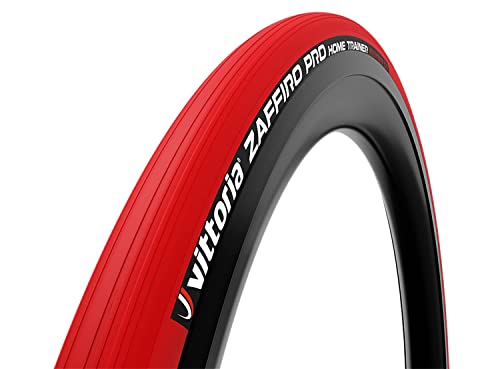
Vittoria
Vittoria Zaffiro Pro Home Trainer Tyre
Best for Regular wheel-on training
A proper indoor-only compound that runs cool and quiet, with a bright marker so you never accidentally fit it for the road. The one I keep on my wheel-on wheel.

Continental
Continental Hometrainer II Tyre
Best for Folding option, easy fit
A folding bead trainer tyre that is quick to mount and grips the roller consistently. A touch dearer but a known quantity from Continental.
Both are clearly marked as indoor-only and use a high-density compound. Fit one to a dedicated rear wheel if you have a spare, so you can swap your bike between road and turbo in seconds. For the full range, including mountain-bike sizing, see my turbo trainer tyre roundup for mountain bikes.
Fitting and pressure: a couple of coach notes
Once you have the right tyre, two things matter for a quiet, slip-free ride:
- Inflate to the higher end of the recommended range. A firmer tyre deforms less against the roller, which cuts heat and noise. I run mine near the top of the printed pressure window.
- Set roller clamp pressure correctly. Too loose and the tyre slips and squeals under power, too tight and you wear the tyre faster and load the bearings. Tighten until the tyre stops slipping on a hard standing-start effort, no more.
If you are getting slip even with a trainer tyre, that is almost always a clamp-pressure or tyre-pressure issue, and I walk through it in how to fix turbo trainer slipping issues. And if your road tyre is wearing fast on the turbo, the causes are covered in what causes tyre wear on wheel-on trainers.
Do you need a special tyre? My take
Do you need a special turbo trainer tyre? If you ride direct drive, no, and that is one of the quiet joys of the format. If you ride wheel-on and train regularly through the winter, yes: a 25-pound trainer tyre runs cooler and quieter, kills the rubber dust, and stops you slowly destroying a far pricier road tyre. Light, occasional users can get away with a sacrificial old tyre and a bit more noise. Just never, under any circumstances, take a trainer tyre out onto the road.